
Metal fabrication is one of the foundational trades of UK manufacturing and construction. From the structural steelwork in commercial buildings to precision components in industrial machinery, skilled fabricators are behind a significant proportion of what gets built in this country.

A metal fabrication apprenticeship is the structured route into this trade, and for anyone considering a career in engineering, it is worth understanding exactly what the programme involves and what it leads to.
What Is Metal Fabrication?
Metal fabrication is the process of cutting, shaping, forming, and assembling metal components into finished products or structures. Fabricators work with a variety of materials, most commonly steel, including rolled steel joists, columns, channels, steel plate, and sheet metal, using a combination of hand tools, power tools, and specialist machinery.
The work ranges from large structural fabrications for construction and infrastructure projects to precision components produced to tight engineering tolerances. In all cases, the core requirement is the ability to read engineering drawings, work accurately, and produce components that meet specification.
What The Apprenticeship Covers
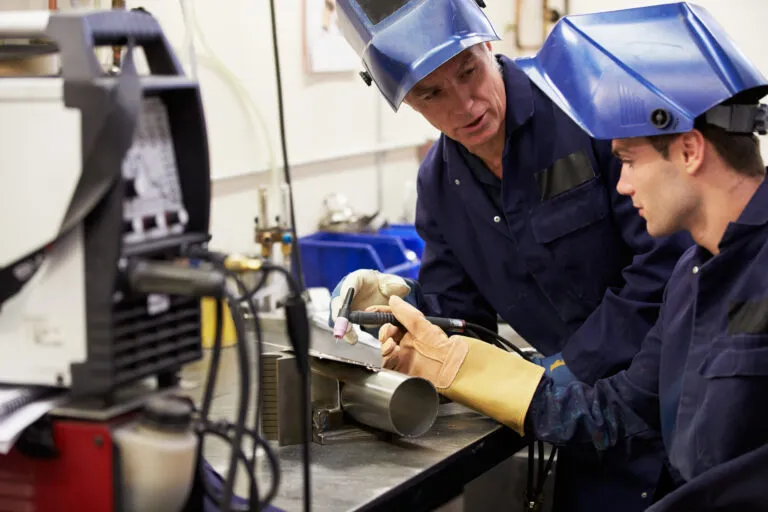
The Level 3 Metal Fabrication apprenticeship is a comprehensive programme that develops both the practical skills and the underpinning technical knowledge required to work as a competent fabricator. Training is delivered through a combination of structured off-the-job learning and supervised workplace practice, with a dedicated lead trainer providing consistent support throughout.
Over the course of the programme, apprentices develop skills and knowledge across:
- Reading and interpreting engineering drawings and fabrication specifications
- Marking out metal components for cutting and forming operations
- Cutting operations using manual and powered cutting tools, including oxy-fuel and plasma cutting
- Forming and bending operations including press braking and rolling
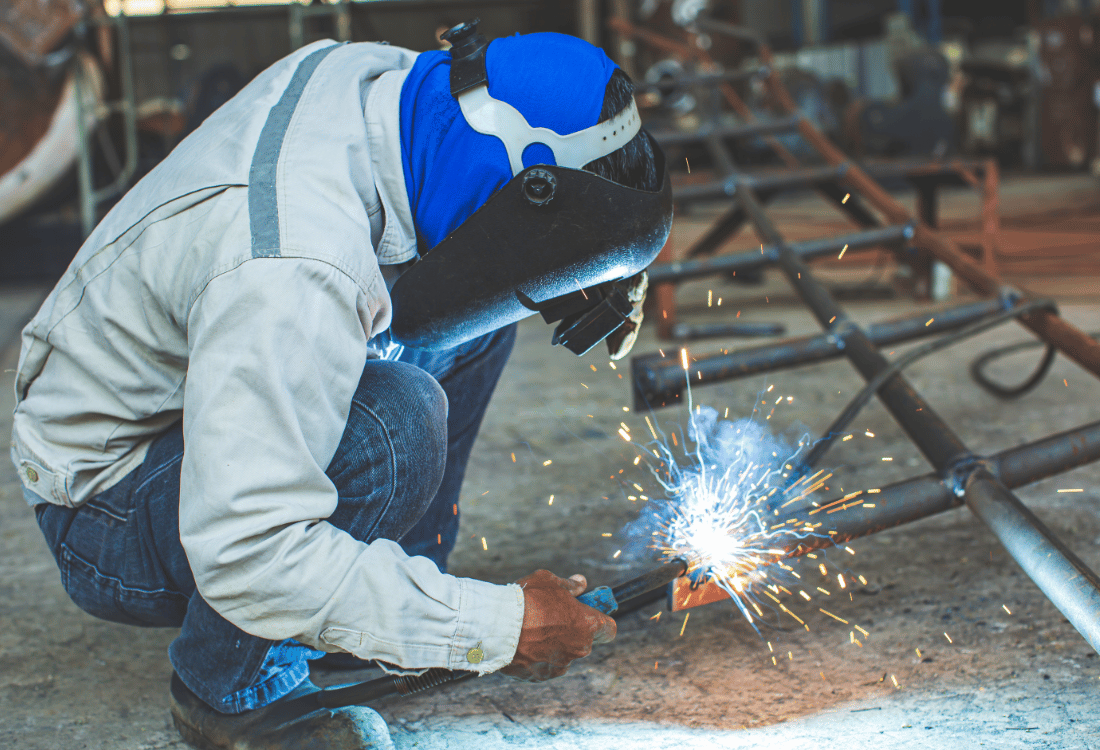
- Joining metals using welding processes relevant to the fabrication context
- Assembling fabricated components to specification
- Inspecting and measuring finished work against drawing requirements
- Safe use of equipment and compliance with workshop health and safety requirements
The programme culminates in an end-point assessment against the national standard, which tests both occupational competence and underpinning knowledge. Successful apprentices are qualified to work as metal fabricators across a wide range of industrial sectors.
The Difference Between Fabrication And Welding
A common question is how metal fabrication differs from welding. Welding is one process within the broader scope of fabrication. It is the method used to join metal components. A fabricator, by contrast, is responsible for the full production process: planning the job from drawings, marking out and cutting material, forming components to shape, and then assembling and joining them into the finished item.
Welding is therefore a key skill within a metal fabricator's toolkit, but the fabricator role encompasses much more. This breadth is part of what makes the qualification so valuable, as a qualified fabricator can manage a job from raw material through to finished components.
Why Employers Invest In Fabrication Apprenticeships
The demand for skilled metal fabricators remains strong across sectors including construction, structural engineering, rail, offshore energy, and general manufacturing. Experienced fabricators are not easy to recruit, and businesses that rely on fabrication as a core process cannot afford gaps in this capability.
A metal fabrication apprenticeship allows employers to develop fabricators who are trained specifically on the materials, equipment, and specifications relevant to their operations. The apprenticeship model also means that development happens in the workplace, as apprentices are productive members of the team throughout the programme, rather than students returning from an extended period away.
For smaller fabrication businesses in particular, this is a practical and cost-effective way to bring on the next generation of skilled workers without disrupting operational capacity.
Career Prospects For Qualified Fabricators
Completing a metal fabrication apprenticeship opens the door to a broad and well-paid career. Qualified fabricators work across a wide range of environments, from workshop-based production to on-site structural installation. With experience, progression into roles such as senior fabricator, fabrication supervisor, estimator, or workshop manager is well-established.
The skills developed through afabrication apprenticeship are also highly transferable. A qualified fabricator can move between sectors, from construction to manufacturing to energy, giving them a degree of career flexibility that many other engineering routes do not offer.
Is A Metal Fabrication Apprenticeship Right For You?
If you enjoy practical, hands-on work and have an interest in how things are made and assembled, metal fabrication offers a genuinely satisfying career. The work is varied, the standards are high, and the results are tangible. You can see exactly what your skills have produced at the end of every shift.
For employers, the question is simpler: if fabrication is part of your operations, developing your own fabricators through an apprenticeship is one of the most effective workforce strategies available.
Start building skilled fabricators for your business. Contact the Qualitrain Engineering Academy today.

Image Source: Envato
Share this
Why Study Engineering?
Upskill Your Career Path: A Level 3 Metal Fabrication Apprenticeship

No Comments Yet
Let us know what you think