






Lift Truck and Powered Access Engineering Technician Apprenticeship

Level 3

Engineering Academy
 
Make An Enquiry

What Is A Lift Truck and Powered Access Engineering Technician?

Every warehouse, manufacturing plant, construction site and logistics operation depends on powered equipment to move goods and people safely. When a forklift goes down or a powered access platform fails an inspection, the cost is immediate — downtime, safety risk, and pressure on your maintenance team to fix it fast. Finding engineers with the right skills to service, repair and maintain this equipment to the required standard is a persistent challenge for operations across the UK.

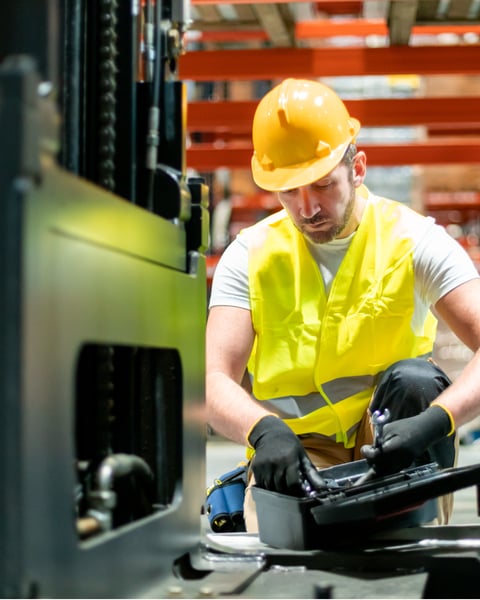
A Lift Truck and Powered Access Engineering Technician is trained to do exactly that. They service, repair and maintain lift trucks and powered access vehicles — including manual, electric, diesel, LPG and hybrid machines, forklifts, scissor lifts, vertical mast machines, articulated and telescopic booms, and elevated work platforms. Working to manufacturer specifications, legal compliance requirements, and your organisation's operational standards, they carry out detailed inspections, diagnose and repair mechanical, electrical and hydraulic faults, and ensure your fleet stays safe, compliant and operational.

Lift and Escalator Engineering Website Image-1

This is a Level 3 apprenticeship delivered by Qualitrain Engineering Academy. Training can also be delivered on site or at your employer's premises where you have a sufficient cohort. The programme runs for 36 months and is funded through the Apprenticeship Levy.

Who Is It For?

Lift truck and powered access engineering technicians are found across every sector that depends on mechanical handling and powered access equipment — including engineering, manufacturing, construction, food production, storage, logistics, and warehousing. Wherever equipment needs to be inspected, serviced and kept in safe working order, this role is essential.

This programme is ideal for both new entrants to engineering and existing employees who service or maintain powered equipment and want to formalise their skills with a nationally recognised qualification. If your maintenance team is stretched, if you are planning to expand your fleet, or if you want to develop in-house capability rather than relying on third-party service contracts, this is the apprenticeship to consider.

Typical job titles associated with this apprenticeship include:

  • Forklift Engineer
  • Forklift Technician
  • Powered Access Equipment Engineer
  • Powered Access Equipment Technician

Typical Attributes Gained by Candidates

Technical Inspection

Carries out detailed inspections of lift trucks and powered access machines in compliance with LOLER and PUWER regulations. Identifies faults across mechanical, electrical, hydraulic and safety systems — including steering and braking, lifting mechanisms, chassis, traction systems and guards — and assesses whether issues render the machine unsafe or require monitoring. 

Fault Diagnosis and Repair

Applies structured diagnostic principles and problem-solving techniques to identify and rectify faults across mechanical, electrical and hydraulic systems. Interprets manufacturer technical data and repair instructions, removes and replaces components, carries out repairs, and performs functional testing and quality checks on completion. 

Preventative Maintenance

Plans and carries out scheduled preventative maintenance on lift trucks and powered access equipment in line with manufacturer guidelines and organisational requirements. Understands the importance of planned maintenance for safety, legal compliance and minimising unplanned downtime. 

Safe and Compliant Working

Applies health and safety procedures, safe systems of work and legal compliance requirements at all times — including LOLER, PUWER, COSHH, RIDDOR, and electrical safety regulations. Maintains a clean, safe working area and manages resources in line with quality, sustainability and environmental standards. 

Records and Communication

Records job information accurately in paper-based or electronic formats including job sheets, risk assessments, service records and manufacturer documentation. Communicates effectively with supervisors, colleagues and customers, adapting style and technical language to suit the audience. 

Back to top

What Skills and Knowledge Will Be Achieved?

Apprentices develop a comprehensive technical toolkit covering the inspection, maintenance, diagnosis and repair of lift trucks and powered access equipment across mechanical, electrical and hydraulic systems. Training covers the full range of equipment types and is grounded in the legal and regulatory framework that governs safe operation in the UK.

At Qualitrain Engineering Academy, technical skills are taught alongside the professional disciplines that make engineers effective in the workplace — structured problem-solving, quality management, customer care, and continuous improvement. Apprentices graduate with both the hands-on capability to keep equipment operational and the professional behaviours that employers need in a field service or workshop environment.

Lift Truck and Powered Access Engineering Technician: Knowledge and Skills Overview

  • Health and Safety Legislation: LOLER, PUWER, COSHH, RIDDOR, Electrical Safety, Noise, Working at Height
  • Tools, Equipment and Diagnostic Instruments: Selection, Safe Use and Maintenance
  • Materials, Joining Methods and Fabrication Techniques
  • Electrical, Electronic and Hydraulic Circuit Principles and Components
  • Lift Truck and Powered Access Machine Systems: Powertrain, Steering, Braking, Lifting Gear
  • Planned, Preventative and Reactive Maintenance Practices
  • LOLER and PUWER Inspection Techniques
  • Fault Diagnosis: Manufacturer Process Flows, Guided Fault Finding, Functional Testing
  • Mechanical Repair and Diagnosis: Dismantling, Measurement and Reassembly
  • Electrical Repair and Diagnosis: Wiring Diagrams, Multimeter Use, Fault Identification
  • Hydraulic Repair and Diagnosis: Circuit Diagrams, Pressure Gauges, Fault Repair
  • On-Board Diagnostics and Telematics
  • Manufacturer Specifications and Technical Data Interpretation
  • Functional Testing and Quality Checks
  • Stock Control, Parts Management and Equipment Storage
  • Warranty Principles and Impact on Maintenance Decisions
  • Record Keeping: Job Sheets, Risk Assessments, Service Records
  • Verbal and Written Communication Techniques
  • Environmental and Sustainability Regulations
  • Equality, Diversity and Inclusion

What Are The Benefits For The Business?

Powered equipment failures cost businesses in multiple ways — lost production time, emergency call-out fees, failed inspections, and in the worst cases, serious safety incidents. Most organisations manage this reactively, calling in third-party engineers when something goes wrong rather than building internal capability that keeps equipment running and compliant on an ongoing basis.

A Qualitrain Engineering Academy-trained Lift Truck and Powered Access Engineering Technician gives you that internal capability. They can carry out scheduled inspections and preventative maintenance to LOLER and PUWER standards, diagnose faults systematically rather than replacing parts on instinct, and ensure your fleet is documented, recorded and compliant without depending on external contractors for routine work.

For businesses with significant powered equipment fleets — whether in manufacturing, logistics, warehousing or construction — this represents a meaningful reduction in service costs and equipment downtime over the course of the apprenticeship and beyond. The programme is fully funded through the Apprenticeship Levy, meaning you develop this capability without drawing on operational budgets.

On successful completion, apprentices achieve professional recognition aligned with the Institute of Mechanical Engineers (IMechE) at Engineering Technician level and the Institute of the Motor Industry (IMI) at Associate Member level — qualifications that reflect the breadth and depth of what they have learned.

How Long Does The Apprenticeship Take?

Typically, this apprenticeship will take 36 months to complete. Training is delivered at your facility or on site at your employer's premises. Register your interest now to secure priority access to programme information and funding guidance.


Is This A Government Funded Qualification?

Funding for the Lift Truck and Powered Access Engineering Technician Apprenticeship can be accessed through the Apprenticeship Levy. If you do not pay the Apprenticeship Levy, the Government will co-invest and fund 95% of the cost of the apprenticeship. The maximum funding band for this standard is £16,000.

If you have any questions about funding, Qualitrain Engineering Academy's team is here to help — from setting up your Digital Apprenticeship Account through to identifying the right funding route for your business and your apprentices.

What Our Clients Say About Us

“A pleasure to work with, and obviously good at what he does”
Gill Peak
Birtley Group
“Flexible, personable, and highly professional”
Wesley Auden
Senior Human Resources Professional, Adient
“Unrivalled Commitment to our Business”
Chris Goodburn
Continuous Improvement Manager, First Great Western
“A Tremendously Powerful Training Partnership”
David Garrard
Continuous Improvement Manager, First Capital Connect
“Visible and Measurable Return on Investment”
Bryan Harris
MD, Harrington Generators International Ltd
“A Great Source of Support”
Nick Bridgman
Production Engineer, Surgical Innovations Limited
“We Could't have Done it Without You”
Philip Yell
Operations Manager, Safetykleen Ltd

Our Accreditations & Awards

Our Accreditations & Awards

Contact Information

Address: Genesis Centre, 32-46 King Street, Alfreton, Derbyshire, DE55 7DQ

Phone Number: 01773 417340

Email Address: info@qualitrain.co.uk

Get In Touch With Us

Get In Touch With Us!

Related Articles

From Our Blog

Stay up to date with what is new in our industry, learn more about the upcoming products and events.

IPAF MEWP Courses: Ensuring Legal Compliance For Powered Access Equipment Operations
 Powered access equipment in use at a building site which is being safely utilised through IPAF MEWP training.

IPAF MEWP Courses: Ensuring Legal Compliance For Powered Access Equipment Operations

May 28, 2026 11:00:00 AM 3 min read
How Does A Lean Manufacturing Operative Apprenticeship Help To Reduce Waste?
A manufacturing operative inspects a production line and adjusts components, demonstrating lean manufacturing practices focused on process efficiency, quality control, and waste reduction through skilled operational training.

How Does A Lean Manufacturing Operative Apprenticeship Help To Reduce Waste?

May 21, 2026 11:00:00 AM 3 min read
What Improvements Can A Level 4 Improvement Practitioner Deliver?
An instructor standing in front of a board coaching a group of improvement practitioner apprentices.

What Improvements Can A Level 4 Improvement Practitioner Deliver?

May 14, 2026 11:00:00 AM 3 min read
See All Our Blogs