Every lift and escalator company in the UK is facing a version of the same conversation. A senior engineer retires or announces they are going to. A contract comes up that needs more hands than you have. A client asks whether you can cover a new site, and you quietly calculate whether the team can stretch. The answer, increasingly, is no.
This is not a staffing inconvenience. It is a structural problem that has been building for years and is now reaching a point where it actively limits growth, service quality, and in some cases the ability to comply with legal obligations. The UK lift and escalator market is projected to nearly double to £5.24 billion by 2034. The demand side of this industry is accelerating. The supply of qualified engineers is not keeping pace.
Apprenticeships will not fix this overnight. But for any lift or escalator business thinking seriously about where its workforce will come from in three, five, or ten years, the structured apprenticeship route is the most direct and most cost-effective answer available. The alternative is to keep firefighting, keep paying premium rates for engineers trained by someone else, and keep watching your capacity cap.
A Market Growing Faster Than the Workforce to Service It
The context here matters. This is not an industry in managed decline looking for ways to reduce headcount. It is the opposite. Urbanisation, high-rise residential construction, transport infrastructure investment, and the rapid expansion of digital and IoT-connected lift and escalator systems are all driving sustained demand for engineering expertise.
LEIA members collectively maintain over 300,000 products across the UK. That installed base requires planned maintenance, reactive repair, and increasingly, modernisation. The UK government's investment in rail infrastructure alone is significant: over $12.5 million was committed in 2024 to replace fourteen aging escalators across Liverpool Lime Street, James Street, Moorfield, and Hamilton Square. Projects at this scale require engineers who understand the full technical scope of escalator systems.
The Building Safety Act, updated LOLER and PUWER obligations, and the rising complexity of modern control systems have raised the technical floor for what competent lift and escalator engineering actually means. Engineers working on these systems need to understand BS 7255, BS 7801, digital control diagnostics, and the documentation requirements that now accompany every service visit. This is not work that can be handed to someone without proper training and expected to go well.
|
|
Key statistic: The UK elevator and escalator market is forecast to grow at 5.4% CAGR (Compound Annual Growth Rate) through to 2034. The skilled workforce available to service that growth is already under pressure and is not on track to meet demand.
|
The Workforce Is Ageing and the Replacement Pipeline Is Thin
The lift and escalator industry shares a problem common to most engineering and construction trades in the UK: a significant proportion of its most experienced engineers are within ten to fifteen years of retirement, and the pipeline of people entering the trade at the other end is insufficient to replace them.
Market analysis of the UK sector identifies this directly. The aging workforce is retiring faster than new entrants are being trained, creating a skills gap that threatens service quality and response times. Training programmes for lift engineers require several years of apprenticeship and certification, which means there is no fast route. You cannot bring someone in off the street and have them competently servicing traction lifts within a few months. The lead time is long, and the window to act is now.
The wider construction and engineering context reinforces this. ONS data shows engineering and manufacturing vacancies in England, Scotland, and Wales consistently running 40% above pre-pandemic levels through 2024. Competition for skilled labour from adjacent engineering sectors adds further pressure. Electrical engineers, building services engineers, and automation specialists are all being recruited by industries with stronger brand recognition among school leavers.
The lift and escalator sector has historically done a poor job of marketing itself to young people. It is often perceived through the lens of the industry's oldest image, rather than what it actually is: a technically sophisticated discipline that now involves digital control systems, IoT connectivity, AI-driven predictive maintenance, and compliance with a complex regulatory framework. The engineers servicing KONE's EcoMod 140 escalators on the Merseyrail network, or maintaining Otis ONE IoT-connected units at commercial developments in London's Broadgate, are working with genuinely advanced technology. That story is not being told loudly enough to the people who need to hear it.
What the ST0252 Apprenticeship Actually Delivers
The Level 3 Lift and Escalator Engineering apprenticeship (ST0252, version 1.2, updated April 2025) was developed by industry, for industry. The Trailblazer Group that shaped this standard was made up of UK lift and escalator employers, working through LEIA, to define exactly what a competent engineer in this occupation needs to know and be able to do. This is not a generic engineering qualification with lift content bolted on. It is specific to the occupation.
The programme runs for 36 months, with an additional four-month end-point assessment period. Apprentices choose one of four pathways based on the employer's business needs:
- Lift installation: installing passenger and goods-carrying lift systems in new or existing buildings
- Escalator or moving walk installation: installing escalators and moving walks in commercial and domestic environments
- Lift maintenance and repair: planned and reactive maintenance and repair of existing passenger and goods-carrying lifts
- Escalator or moving walk maintenance and repair: maintaining and repairing existing escalators and moving walks
The core curriculum covers health and safety legislation including LOLER, PUWER, CDM Regulations, COSHH, and the Building Safety Act. Apprentices learn to interpret electrical wiring diagrams, mechanical drawings, and general arrangement drawings. They work with analogue and digital control systems, use electrical measuring equipment for fault diagnosis, and apply structured fault-finding techniques to mechanical, electrical, and hydraulic systems.
The programme explicitly includes Lean, Six Sigma, and PDCA continuous improvement methodology. This is not standard in most engineering apprenticeships and reflects an understanding that competent modern engineers contribute to operational improvement, not just task completion.
End-point assessment consists of three components: a 30-question multiple-choice knowledge test, a two-hour practical assessment with questioning in a simulated environment, and a 75-minute professional interview underpinned by a portfolio of evidence compiled during the programme. Grading is pass or distinction. To achieve distinction, an apprentice must demonstrate distinction in both the knowledge test and the professional interview.
Upon completion, the apprenticeship aligns with Engineering Technician status through the Society of Operations Engineers (SoE).
|
|
The ST0252 standard was funded at up to £25,000 per apprentice from April 2025 (version 1.2). Employers with an Apprenticeship Levy account can use levy funds directly. Employers with a payroll below the levy threshold pay a maximum of 5% of the training cost, with the remaining balance covered by the government.
|
The Commercial Case for Investing in Apprentices Now
The argument for apprenticeships is sometimes framed in terms of social responsibility or workforce diversity. These are legitimate considerations. But for most lift and escalator businesses, the decision comes down to commercial logic, and the commercial case is strong.
Succession planning you control
An apprentice trained through your business learns your systems, your procedures, your standards, and your customer relationships. When they complete the programme, they are not a generic hire who needs months of onboarding. They are a qualified engineer who already knows how you work. That institutional knowledge is difficult to put a price on, but it is genuinely valuable, and it is exactly what walks out of the door every time an experienced engineer retires without a successor in place.
Cost of recruitment versus cost of training
The lift and escalator sector's skills shortage is already driving up wage costs. Engineers with experience are in short supply and know it. Replacing a skilled engineer through external recruitment carries direct costs, recruitment agency fees, onboarding time, and the risk of hiring someone whose competence you are inferring rather than know. An apprenticeship programme gives you a structured three-year window in which you are shaping competence to your specific requirements and assessing it continuously.
Funded training through the Apprenticeship Levy
Employers with an annual payroll above £3 million pay 0.5% of that payroll into the Apprenticeship Levy. That money sits in a digital account and can only be used for approved apprenticeship training. If it is not used, it is lost to HMRC after 12 months. For levy-paying businesses in the lift and escalator sector, not running apprenticeships means paying for training you are not receiving. For smaller businesses below the levy threshold, the 95 - 100% government co-investment model means the training cost is minimal relative to the value of a qualified engineer.
Technology is changing the job faster than informal training can keep up
The integration of IoT, predictive maintenance, and digital control diagnostics into modern lift and escalator systems means the knowledge base required for the occupation is expanding. Engineers who learned their trade on older analogue systems may be expert at what they know but may not have been exposed to the diagnostic approaches, documentation requirements, and digital systems that newer installations demand. A structured apprenticeship programme built around the current ST0252 standard addresses this directly. It trains people to the level the industry needs now, not the level it needed fifteen years ago.
What to Look for in a Training Provider
Not all apprenticeship training is equivalent. The ST0252 standard sets a floor for what must be covered, but the quality of delivery, the depth of technical support, and the practical facilities available to apprentices vary considerably between providers.
When assessing a provider, the questions worth asking include: Do they hold a current Ofsted grade for apprenticeship delivery? Where is training delivered, and does the facility closely replicate actual working environments? Are they flexible enough to deliver live online sessions? Can they support all four pathway options, or only some? How do they support employers throughout the programme, not just at the start? And what is their end-point assessment track record?
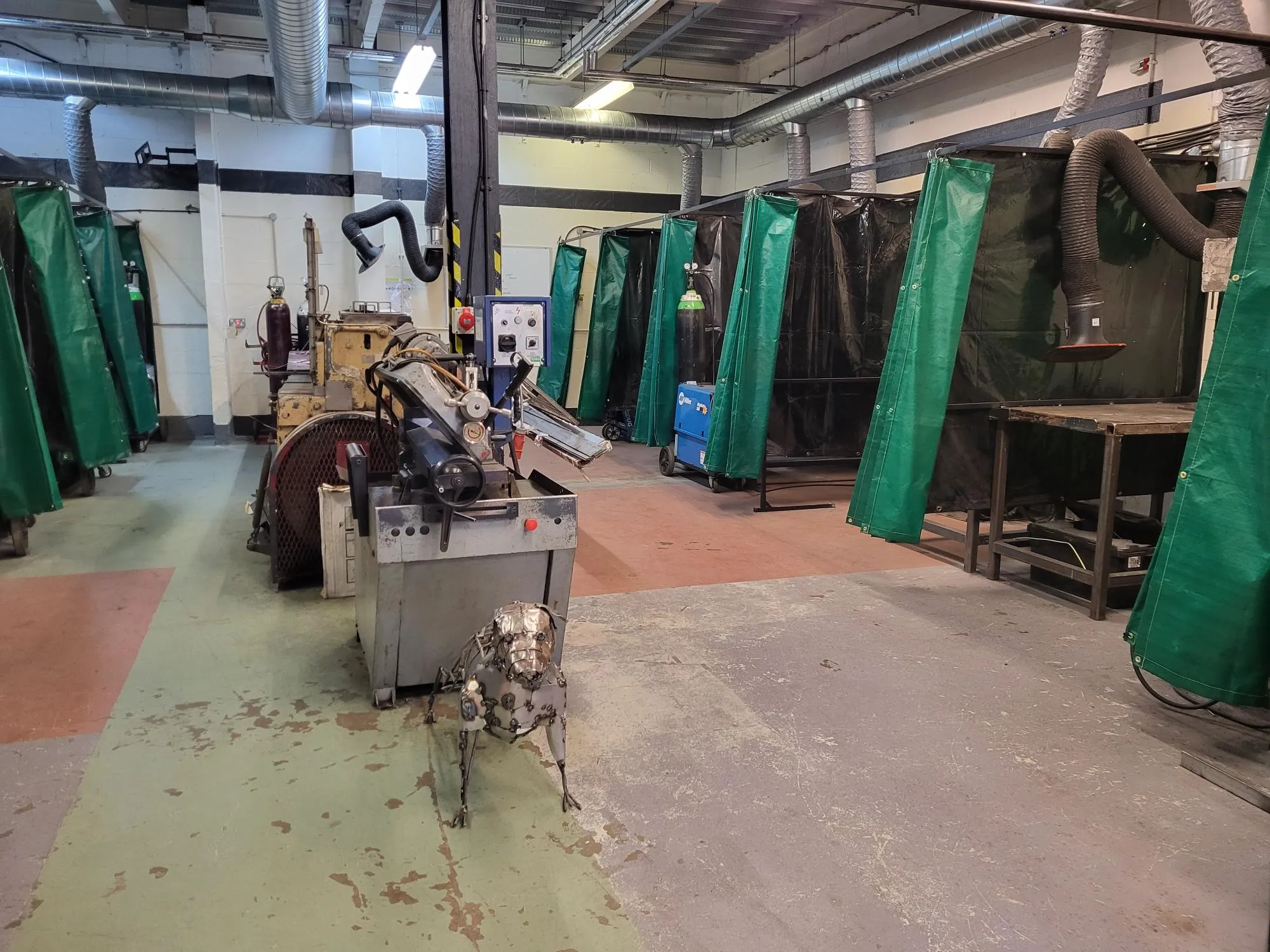
Qualitrain Engineering Academy delivers the ST0252 apprenticeship online and from a dedicated training facility in Hucknall, Nottinghamshire, with all four pathways available. Training can also be delivered on employer premises where appropriate. The programme incorporates Lean and continuous improvement methodology as part of the core curriculum, equipping apprentices with the analytical tools to contribute to service improvement from day one of their career.
The Window to Act Is Shorter Than It Feels
The consistent mistake companies make with apprenticeships is treating them as something to set up when the workforce problem becomes acute. By the time it is acute, it is already too late to solve through apprenticeships. A lift installation or maintenance business that loses three senior engineers to retirement in the next two years and has no apprentices currently on programme has a serious problem and a three-year wait before any apprentice-trained solution arrives.
The time to start an apprenticeship programme is before the gap is visible. That means planning now for the workforce you will need in 2027, 2028, and beyond. The businesses in this industry that will be best placed to take on new contracts, retain key clients, and grow their service footprint are the ones building their engineer pipeline today.
The lift and escalator industry has a skills problem that is not going to resolve itself through the general labour market. The market context is one of growth, not contraction. The regulatory environment is getting more demanding, not less. The technology is getting more complex, not simpler. The structured apprenticeship route, underpinned by the ST0252 standard and funded through the levy, is the most credible tool the industry has for building the workforce it will need.
The question is not whether to invest in apprenticeships. The question is whether you start early enough to make a difference.
Qualitrain Engineering Academy delivers the Level 3 Lift and Escalator Engineering apprenticeship (ST0252) online and from our facility in Hucknall, Nottinghamshire. To discuss how the programme fits your workforce requirements, contact us or make an enquiry through the QEA website.



Comments (2)