
Modern manufacturing is no longer purely mechanical. Today's production environments rely on complex automated systems that integrate electrical components, computer controls, and precision mechanical parts, all working in concert. When something goes wrong, businesses need engineers who can diagnose faults across all of those disciplines simultaneously. That's exactly what a mechatronics maintenance technician apprenticeship is designed to produce.

For employers looking to build in-house technical capability, and for individuals seeking a future-proof career in engineering, this is one of the most valuable qualifications available in the UK today.
What Does A Mechatronics Maintenance Technician Actually Do?
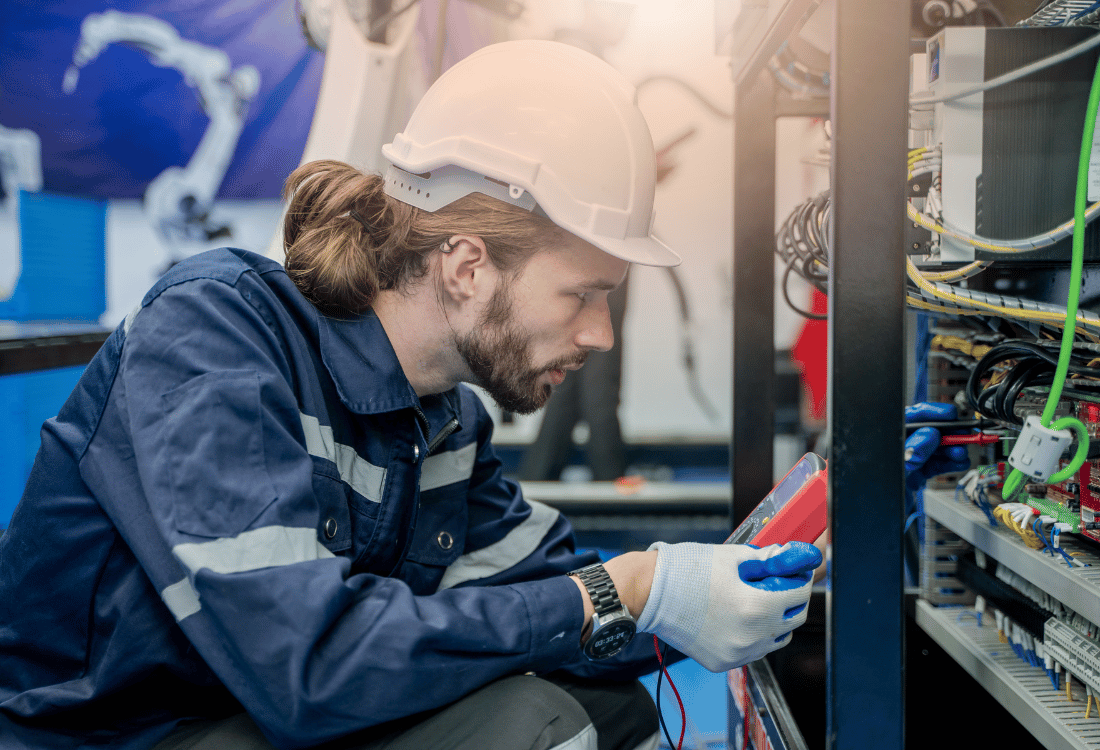
A mechatronics maintenance technician is responsible for keeping automated and computer-controlled production systems running at full efficiency. This means diagnosing faults across mechanical, electrical, and electronic systems, performing planned preventive maintenance, and making adjustments to ensure optimal performance.
Unlike a maintenance role that focuses on one area (purely electrical, for instance), mechatronics technicians work across the full system. They understand programmable logic controllers (PLCs), hydraulic and pneumatic systems, robotics, electrical control circuits, and mechanical power transmission. This breadth of knowledge makes them exceptionally valuable in environments where production downtime has a direct and immediate cost.
The Case For Apprenticeship-Based Learning
A mechatronics maintenance technician apprenticeship delivers this wide-ranging skill set in a way that suits both businesses and individuals. Rather than pulling someone out of the workplace for months at a time, the apprenticeship model integrates structured learning with real on-the-job development across a 42-month programme.
Apprentices develop their competencies directly on the equipment they will be responsible for maintaining. This means that by the time they complete the programme and pass their end-point assessment, they are fully competent on the systems that matter to their employer, rather than simply equipped with theoretical knowledge that requires further translation into practice.
For businesses, this is a significant advantage. The investment in training delivers a return throughout the apprenticeship, not just at the end of it, as apprentices begin applying new skills to live maintenance challenges from early in the programme.
Why The Skills Gap Makes This Investment Urgent
The demand for mechatronics-qualified technicians is rising sharply across UK manufacturing. Industry 4.0, the shift towards greater automation, smart manufacturing, and digitally connected production systems, has accelerated the need for engineers who can work across traditional disciplinary boundaries.
At the same time, a generation of experienced engineers is approaching retirement, and there are not enough qualified technicians to replace them. Businesses that do not invest in developing this capability internally will increasingly find themselves competing for a shrinking pool of experienced candidates in the external recruitment market, with salaries and recruitment costs rising accordingly.
A mechatronics apprenticeship is one of the most practical responses to this challenge. It allows businesses to grow their own talent, tailored to their specific systems and operating environment, rather than relying on the open market.
What The Apprenticeship Covers
The Level 3 Mechatronics Maintenance Technician standard covers a broad and expansive curriculum. Apprentices develop knowledge and practical skills across:
- Fault diagnosis and rectification on complex automated systems
- Preventive and planned maintenance techniques
- Electrical control systems and safe isolation procedures
- Pneumatic and hydraulic system maintenance
- PLC programming and troubleshooting
- Mechanical systems including drives, gearboxes, and couplings
- Continuous improvement methodologies applied to maintenance processes
The programme is delivered through a combination of practical workplace learning and structured off-the-job training, with a dedicated lead trainer providing support throughout. Assessment culminates in an end-point assessment against the national standard.
Career Progression And Long-Term Value
For the individual, completing a mechatronics maintenance technician apprenticeship opens the door to a strong and well-compensated career. Qualified technicians move into roles such as maintenance engineer, automation specialist, multi-skilled engineer, and systems integrator, with experienced professionals progressing further into engineering management.
For the employer, a qualified technician represents a long-term asset. The combination of broad technical competency and deep familiarity with the business's specific systems is difficult to replicate through any route other than structured apprenticeship training.
Invest In Engineering Capability That Lasts
Automated systems are not going away. They are expanding. The businesses that will be best placed to manage them are those that have invested in the people capable of keeping them running. A mechatronics maintenance technician apprenticeship is a direct investment in that capability, delivering skilled engineers who are ready to support production from day one of qualification.
Train the engineers your production line depends on. Speak to the Qualitrain Engineering Academy team today.

Image Source: Envato
Share this

Essential Skills You’ll Learn In A Maintenance Technician Apprenticeship
The Crucial Role Of Maintenance Engineers In Supply Chain Continuity

No Comments Yet
Let us know what you think